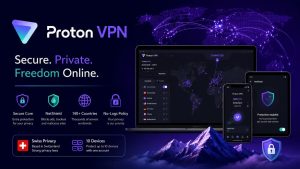
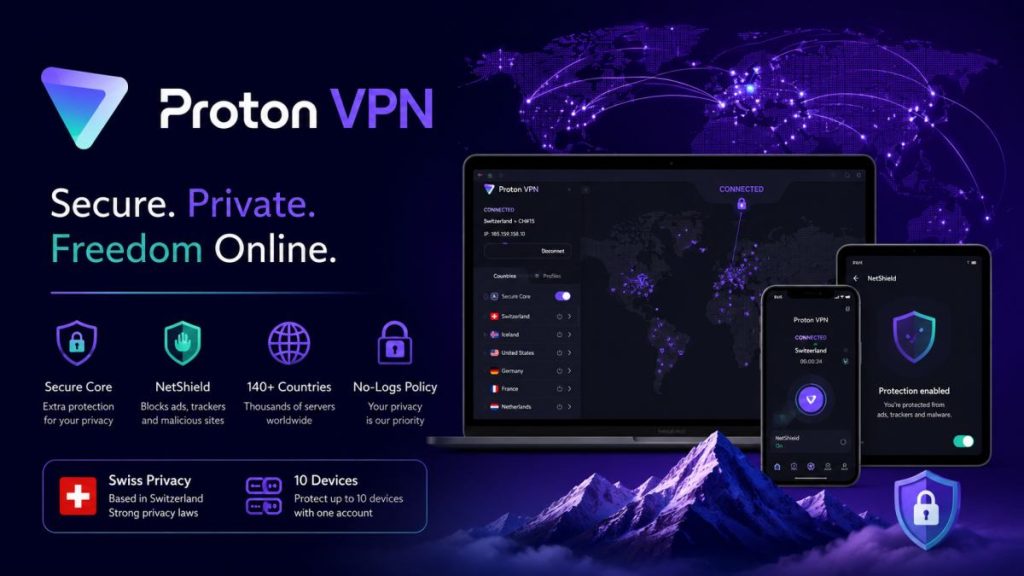
Proton VPN is a privacy-focused virtual private network service designed for users who want to protect their internet connection, reduce exposure of their IP address, and browse with greater control over their online privacy. Unlike many VPN brands built primarily around aggressive discount marketing, Proton VPN has a strong connection to the wider Proton privacy ecosystem.
The service is particularly notable for offering both free and paid VPN plans. This makes Proton VPN relevant to a broad range of users, from beginners looking for a credible free VPN option to privacy-conscious customers who want advanced features such as Secure Core, NetShield, Tor over VPN, and broader server access.
Proton VPN may be worth considering if you care about privacy, want access to modern VPN applications across multiple platforms, or prefer a provider that offers a usable free entry point alongside premium subscriptions.
What Is Proton VPN?
Proton VPN is a VPN service focused strongly on privacy and secure internet access. A VPN creates an encrypted connection between your device and a VPN server. Websites and online services generally see the IP address of the VPN server rather than your direct public IP address.
This can be useful in several everyday situations, including:
- using public or untrusted Wi-Fi networks
- reducing direct exposure of your home IP address
- adding privacy to everyday browsing
- connecting through VPN servers in other locations
- protecting traffic between your device and the VPN server
However, Proton VPN is not simply positioned as a generic VPN app. Its broader appeal comes from the combination of a free tier, advanced privacy features, multi-platform applications, and integration with the wider Proton ecosystem.
Proton VPN Free: One of Its Biggest Advantages
One of the most distinctive aspects of the service is its free VPN plan. Many free VPN products impose strict data limits, display advertising, or offer unclear privacy terms. The provider takes a different approach by offering a free tier designed as a genuine entry point into its privacy ecosystem.
The free plan can be attractive for:
- users who cannot justify paying for a VPN yet
- beginners who want to understand how a VPN works
- occasional VPN users
- privacy-conscious users who want a free starting point
- people who want to test the available VPN applications
A major advantage is that the free offering does not follow the common model of giving users only a tiny monthly data allowance. This makes it considerably more practical than many free VPN alternatives.
There are still important differences between free and paid access. Premium users receive broader server choice, higher performance options, additional features, and more flexibility. The free plan should therefore be viewed as a strong entry-level option rather than a complete replacement for every premium use case.
Proton VPN Paid Plans and Premium Features
Users who need more capabilities can upgrade to paid Proton plans. The exact plan structure may change over time, so it is important to compare current terms before purchasing.
Depending on the selected subscription, paid access can provide benefits such as:
- access to a much broader VPN server network
- higher VPN performance
- multiple simultaneous device connections
- NetShield
- Secure Core
- P2P support
- streaming-related capabilities
- Tor over VPN
- advanced VPN functionality
Proton also offers broader subscription bundles for users interested in combining VPN access with other services. This can make sense if you already use or genuinely need encrypted email, cloud storage, password management, and other privacy tools.
However, do not automatically choose the largest bundle. If your only requirement is a VPN, compare the standalone VPN option with broader packages and pay only for services you expect to use.
If you are considering an upgrade, you can check current Proton VPN plans and offers before choosing a subscription. Compare the latest features, billing terms, and included services to find the option that best matches your needs.
Secure Core: An Advanced Privacy Feature
Secure Core is one of the service’s most recognizable advanced features. It is designed to route VPN traffic through additional privacy-focused infrastructure before the connection reaches the final VPN server.
The concept is particularly relevant to users concerned about sophisticated network attacks or the possibility that infrastructure in a destination region could be monitored or compromised.
Secure Core may appeal to:
- privacy-focused users
- journalists and researchers
- people handling sensitive communications
- users who prefer multi-hop style VPN routing
For ordinary browsing, not every user needs to route all traffic through additional VPN hops. Extra routing can affect latency and performance. The value of Secure Core therefore depends on your threat model and priorities.
NetShield Ad-Blocker and Threat Filtering
NetShield is another important privacy and browsing feature. It uses DNS filtering to help block selected unwanted domains associated with advertising, tracking, and malicious content.
Potential benefits include:
- reducing exposure to known malicious domains
- blocking some trackers
- reducing some advertising-related requests
- potentially improving browsing efficiency in certain situations
NetShield can be useful as an additional privacy and browsing layer, but it should not be confused with a complete antivirus product. A VPN, DNS filtering system, and antivirus solution address different parts of digital security.
Privacy and No-Logs Positioning
Privacy is central to the brand’s positioning. The service emphasizes Swiss privacy positioning, a no-logs policy, open-source applications, and independent auditing.
When evaluating any VPN provider, users should consider more than a large “no logs” statement on a marketing page. Relevant questions include:
- What data is collected when an account is created?
- What operational data may be processed?
- How does the provider describe connection logging?
- Are applications open source?
- Have important claims been independently assessed?
- Where is the company legally based?
This privacy-focused positioning is one of the main reasons the provider stands apart from many purely discount-driven VPN services.
VPN Servers and Global Coverage
The Proton VPN server network has expanded significantly and provides access across a large number of countries. Broad geographic coverage can be useful because users can select locations closer to them for performance or connect through other supported regions when appropriate.
A larger network can provide:
- more geographic choice
- greater flexibility while traveling
- more nearby server options for many users
- alternative routes when one location is congested
Server count alone should not determine your VPN choice. Infrastructure quality, capacity, location, routing, server load, and protocol selection can all influence real-world performance.
Speed and Performance
VPN performance depends on many factors, including your original internet connection, distance to the selected server, server load, protocol, device, operating system, and local network conditions.
The service offers performance-oriented technology and features intended to improve the connection experience. Paid plans are generally the more appropriate choice for users who prioritize higher performance and broader server selection.
For the best practical results:
- choose a nearby server when location does not matter
- use a modern supported VPN protocol
- compare several nearby servers if performance varies
- remember that multi-hop routing can add latency
- test both Wi-Fi and wired connections when diagnosing speed issues
Supported Devices and Platforms
Proton VPN is available across major device platforms, making it suitable for users with mixed technology ecosystems.
Depending on the platform and current application availability, it can be used with major systems such as:
- Windows
- macOS
- Linux
- Android
- iOS
- supported browsers
- compatible routers and other configurations
This broad platform approach is particularly useful for users who have, for example, a Windows desktop, Android smartphone, iPad, and Linux machine.
Streaming, Travel, and Everyday Use
Many users choose a VPN for a mixture of privacy, travel, public Wi-Fi, and everyday internet use. Paid plans are the more relevant option when users need broader location choice and premium capabilities.
Potential everyday use cases include:
- protecting connections on hotel Wi-Fi
- using airport or café networks
- reducing direct IP exposure
- switching between VPN server locations
- using one privacy ecosystem across several devices
Streaming compatibility can change as platforms modify their systems, so users should check current service information rather than assume permanent access to a specific platform or regional catalog.
Who Should Consider This Service?
This privacy-focused service can be particularly compelling for several types of users.
Privacy-focused users
If privacy is one of your main reasons for purchasing a VPN, the provider deserves serious consideration because privacy is central to the company’s broader product positioning.
Users looking for a free VPN
The free plan is one of the service’s strongest differentiators. It provides a credible starting point for users who do not want to pay immediately.
Existing Proton users
If you already use other Proton services, adding the VPN may create a more integrated privacy setup and simplify account management.
Advanced users
Features such as Secure Core, Tor over VPN, custom DNS options, and other advanced controls can appeal to users who want more than a basic connect-and-forget VPN.
Multi-device users
Paid plans can suit users who need VPN protection across several devices and operating systems.
Interested in Proton VPN?
Compare current plans, premium features, and available offers before choosing your subscription.
Proton VPN Pros and Cons
Pros
- genuine free plan with no traditional monthly data cap
- strong privacy-focused positioning
- Swiss jurisdiction
- open-source applications
- advanced Secure Core feature
- NetShield filtering
- support for major platforms
- broad international server coverage
- integration with the wider Proton ecosystem
Cons
- the free plan has fewer capabilities than paid access
- advanced privacy routing can increase latency
- broader Proton bundles may be unnecessary for VPN-only users
- the best-value promotional pricing may require a longer commitment
Proton VPN Alternatives Worth Comparing
This service is not the only strong option. The best alternative depends on what matters most to you.
- NordVPN — a strong all-round option with a broad balance of performance and security features
- Surfshark — particularly attractive for households that value unlimited simultaneous connections
- ExpressVPN — a polished option for users who prioritize simplicity and ease of use
You can also read our best VPN comparison or learn how to choose the right VPN without overpaying.
Proton VPN FAQ
Is Proton VPN free?
Yes. Proton VPN offers a free plan as well as paid subscriptions. The free option is one of the service’s most notable features and is designed as a genuine entry point for users who want private VPN access without immediately purchasing a subscription.
Does the free plan have a data limit?
The free service is notable for not using the traditional monthly bandwidth cap found with many free VPN products. However, free users have fewer features and less flexibility than paid subscribers.
Is Proton VPN good for privacy?
Privacy is central to the provider’s positioning. The provider emphasizes Swiss privacy, a no-logs approach, open-source applications, independent audits, and advanced features such as Secure Core.
What is Proton VPN Secure Core?
Secure Core is an advanced feature that routes traffic through additional privacy-focused infrastructure before reaching the final VPN server. It is designed for users with stronger privacy requirements.
What is NetShield?
NetShield is a DNS filtering feature designed to block selected domains associated with ads, trackers, and malicious content. It can provide an additional privacy and browsing layer while connected to the service.
How many devices can use the service?
The number of simultaneous devices depends on the selected plan. Paid VPN access can support multiple devices, while the free tier has more restrictive simultaneous-use terms. Always check current plan details before subscribing.
Does Proton VPN work on Windows?
Yes. A dedicated Windows application is available, alongside support for other major platforms.
Does Proton VPN work on Android and iPhone?
Yes. Mobile applications are available for Android and iOS, making the service suitable for smartphones and tablets.
Can I use Proton VPN on Linux?
Yes. Linux is supported, which can make the service attractive to users who prefer open-source operating systems and privacy-focused software.
Is Proton VPN better than NordVPN?
That depends on your priorities. Proton VPN may be particularly appealing to privacy-focused users and people who value a credible free plan. NordVPN is a strong all-round option for users who want a broad balance of performance, usability, and security features.
How does Proton VPN compare with Surfshark?
The service has a particularly strong privacy-focused identity, while Surfshark can be more attractive for large households because of its unlimited simultaneous connections. The better choice depends on your device count and priorities.
Is the paid version worth considering?
Paid access can be worthwhile for users who need broader server choice, higher performance, multiple connections, advanced privacy features, and capabilities beyond the free tier.
Does it replace antivirus software?
No. A VPN and antivirus software serve different purposes. The service protects the connection between your device and the VPN server and offers additional privacy-related features, but a VPN should not automatically be treated as a replacement for endpoint malware protection.
Can I use Proton VPN while traveling?
Yes. A VPN can be particularly useful when using hotel, airport, café, and other unfamiliar networks. Server availability and local rules should always be considered when traveling.
Which Proton VPN plan should I choose?
The free plan can be a good starting point for occasional or basic use. Paid VPN access is more suitable for users who need broader server choice, premium performance, multiple devices, and advanced features. Broader Proton bundles may make sense if you also need other Proton services.
Is Proton VPN Right for You?
Proton VPN is one of the most distinctive services in the VPN market because it combines a serious privacy-focused identity with both free and premium options. The free plan lowers the barrier to entry, while paid subscriptions add broader server access, stronger performance options, multiple-device support, and advanced tools.
Features such as Secure Core and NetShield help differentiate the service from simpler VPN products. The broader Proton ecosystem can also be valuable for users who want multiple privacy services under one account.
It is particularly worth considering if privacy is a major priority, if you want to begin with a free VPN, or if you already use other Proton services. Users primarily focused on unlimited simultaneous connections may prefer alternatives such as Surfshark, while those seeking a broad all-round package may also compare NordVPN.
Before choosing a paid plan, compare the current subscription term, total upfront cost, renewal conditions, device allowance, and included features. That is the best way to determine whether the service provides good value for your specific needs.
Ready to Explore the Available Plans?
Check current plans, features, and available offers before making your decision.