CyberGhost VPN Review – VPN Service, Online Privacy & Security
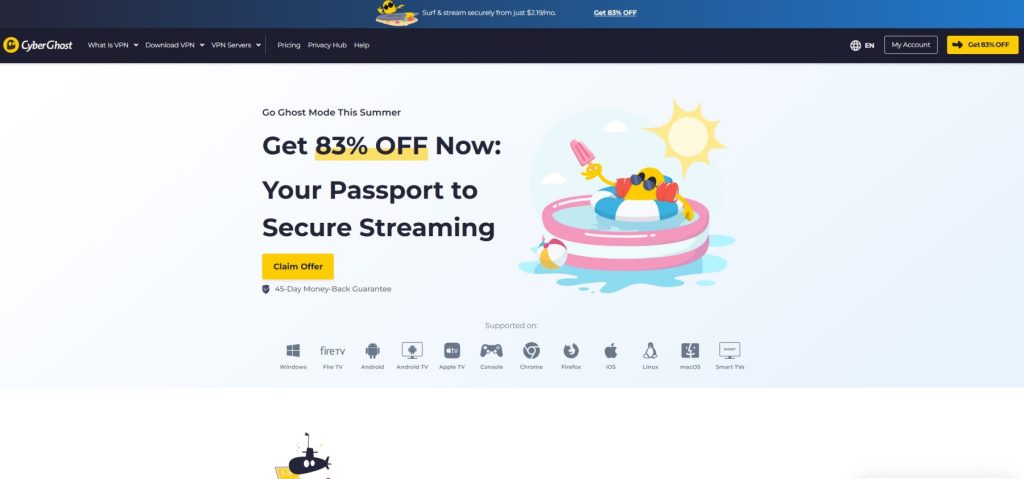

CyberGhost VPN is a popular virtual private network service designed to help users browse the internet securely, protect their online privacy, and access content from around the world. With thousands of servers across more than 100 countries, CyberGhost combines strong encryption, a strict no-logs policy, and user-friendly applications for desktop and mobile devices.
Online privacy has become increasingly important as cyber threats, data tracking, and identity theft continue to grow. Whether you’re using public Wi-Fi, streaming your favorite shows, downloading files, or simply browsing the web, a VPN can help encrypt your internet connection and reduce the amount of personal information exposed online.
CyberGhostVPN offers dedicated servers optimized for streaming, gaming, and torrenting, making it suitable for a wide range of users. The service also supports modern VPN protocols, including WireGuard®, OpenVPN, and IKEv2, allowing users to balance performance, compatibility, and security according to their needs.
This guide explores CyberGhost VPN’s features, subscription plans, privacy tools, server network, and supported devices to help you decide whether it is the right VPN solution for your online activities.
Explore CyberGhost VPN Plans
Compare CyberGhost VPN plans, global server locations, streaming features, and privacy tools.
Explore CyberGhost VPNAffiliate Disclosure: CatalogSpot may earn a commission from qualifying links at no extra cost to you. Prices and features may change, so check the provider's website before purchasing.
Table of Contents
- What Is CyberGhost VPN?
- CyberGhost VPN Plans
- Security Features
- Streaming & Entertainment
- Gaming & P2P
- Privacy Features
- Supported Devices
- Who Should Choose CyberGhost VPN?
- Advantages and Considerations
- Frequently Asked Questions
Quick Facts
| Feature | Details |
|---|---|
| Founded | 2011 |
| Industry | Virtual Private Network (VPN) |
| Server Network | Servers in 100+ countries |
| Protocols | WireGuard®, OpenVPN, IKEv2 |
| Best For | Streaming, privacy, gaming, torrenting, and travel |
What Is CyberGhost VPN?
CyberGhost VPN is a virtual private network service that encrypts internet traffic and routes it through secure servers located around the world. This process helps protect personal information from hackers, internet service providers, and other third parties while improving privacy during everyday browsing.
The platform is designed for both beginners and experienced users. Its applications provide a straightforward interface that makes connecting to secure servers quick and simple, while advanced users can choose preferred VPN protocols and configure additional privacy settings.
CyberGhost has become particularly popular among users who want secure internet access while traveling, streaming media, downloading files through supported P2P servers, or working remotely from public Wi-Fi networks.
CyberGhost VPN Plans
CyberGhostVPN offers subscription plans with the same core security features but different billing periods. Longer-term subscriptions generally provide better overall value while maintaining access to the full server network and privacy tools.
| Plan Type | Best For | Highlights |
|---|---|---|
| Monthly Plan | Short-term use | Full VPN features with flexible billing |
| Long-Term Plans | Most users | Lower monthly cost and extended money-back guarantee |
Regardless of the subscription length, users receive access to CyberGhost’s VPN applications, encrypted connections, global server network, and support for multiple devices under one account.
Features at a Glance
| Feature | Available |
|---|---|
| AES Encryption | ✓ |
| No-Logs Policy | ✓ |
| Streaming Servers | ✓ |
| P2P Servers | ✓ |
| Gaming Support | ✓ |
| WireGuard® | ✓ |
| Kill Switch | ✓ |
| Multi-Device Support | ✓ |
Security Features
The service is designed to help protect your online activity through a combination of strong encryption, secure VPN protocols, and privacy-focused technologies. Every connection is encrypted before your internet traffic leaves your device, helping reduce the risk of unauthorized access when browsing, streaming, or working online.
The service supports several modern VPN protocols, including WireGuard®, OpenVPN, and IKEv2. Each protocol offers different advantages depending on your priorities. WireGuard® is known for balancing speed and security, OpenVPN remains a widely trusted option for compatibility, while IKEv2 can provide reliable performance on mobile devices that frequently switch between Wi-Fi and cellular networks.
CyberGhost also includes an automatic Kill Switch that helps prevent accidental exposure of your real IP address if the VPN connection unexpectedly drops. Instead of allowing internet traffic to continue unprotected, the Kill Switch temporarily blocks network access until the secure connection is restored.
The provider follows a strict no-logs policy, meaning it is designed not to record users’ browsing activity, connection history, or online behavior. Combined with strong encryption, this approach helps improve online privacy while reducing the amount of personal information associated with VPN usage.
Streaming Servers
One of Cyber Ghost VPN’s most popular features is its collection of servers optimized for streaming. Instead of manually testing different locations, users can connect to servers configured for popular streaming platforms, making it easier to enjoy entertainment while maintaining a secure internet connection.
Streaming-optimized servers are regularly maintained to provide stable performance and reliable access. Because streaming services frequently update their systems, having dedicated servers can improve the overall viewing experience compared with using standard VPN servers.
For users who travel internationally, a VPN may also help maintain a more consistent browsing experience when accessing online services while connected to hotel, airport, or public Wi-Fi networks.
Browse Securely Anywhere
Discover streaming servers, gaming servers, secure browsing, and advanced privacy features available with CyberGhost VPN.
View VPN PlansExplore CyberGhost VPN’s secure servers, streaming features, privacy tools, and global network. View VPN Plans
Gaming and P2P Support
CyberGhostVPN includes servers optimized for gaming and peer-to-peer (P2P) file sharing. These servers are intended to provide stable connections while maintaining encrypted traffic and protecting users’ IP addresses during online activities.
Gamers often value low-latency connections and reliable performance, while users downloading large files through supported P2P networks benefit from secure, encrypted connections that help improve privacy.
Because different activities have different networking requirements, CyberGhost organizes many of its specialized servers by purpose, making it easier to select the most appropriate option directly from the application.
Privacy Features
Privacy is one of the primary reasons many users choose a VPN service. CyberGhost helps reduce online tracking by encrypting internet traffic before it leaves your device, making it more difficult for third parties to monitor browsing activity.
In addition to encryption, the platform includes DNS leak protection and supports secure VPN protocols designed to help keep personal information protected while browsing the web.
Whether you’re checking email, shopping online, accessing banking services, or using public Wi-Fi, encrypted connections help add another layer of security to everyday internet use.
Supported Devices
CyberGhost VPN is compatible with Windows, macOS, Android, iPhone, iPad, Linux, smart TVs, browsers, and selected routers. Applications are designed to provide a consistent user experience across different operating systems while allowing users to manage multiple devices under one subscription.
Support for several simultaneous connections makes CyberGhost suitable for individuals as well as families protecting laptops, smartphones, tablets, and home entertainment devices.
Who Should Choose CyberGhost VPN?
CyberGhost VPN is designed for users who want an easy-to-use VPN service without sacrificing important privacy and security features. Its optimized servers, broad device compatibility, and straightforward interface make it suitable for many different online activities.
- Users who value online privacy.
- People streaming content while traveling.
- Remote workers using public Wi-Fi.
- Gamers looking for secure VPN connections.
- Users downloading files through supported P2P servers.
- Families protecting multiple internet-connected devices.
Because CyberGhost combines strong encryption, specialized servers, and an extensive global network, it offers a balanced solution for users seeking both privacy and convenience.
Advantages and Considerations
| Advantages | Considerations |
|---|---|
| Large global server network | Some features vary by platform. |
| Streaming-optimized servers | Subscription pricing depends on plan length. |
| Supports WireGuard®, OpenVPN, and IKEv2 | Available servers may change over time. |
| No-logs policy | Connection speed depends on location and network conditions. |
| Supports multiple devices | Performance may vary depending on the selected server. |
Frequently Asked Questions
What is CyberGhost VPN?
CyberGhost VPN is a virtual private network service that encrypts your internet connection, protects your online privacy, and helps secure your data while browsing, streaming, gaming, or using public Wi-Fi.
How many countries does CyberGhost VPN cover?
CyberGhost VPN operates servers in more than 100 countries, giving users access to a broad global server network.
Does CyberGhost VPN keep logs?
CyberGhost follows a strict no-logs policy, meaning it is designed not to record users’ browsing activity or connection history.
Which VPN protocols are supported?
CyberGhost supports WireGuard®, OpenVPN, and IKEv2, allowing users to choose the protocol that best balances speed, compatibility, and security.
Can I use CyberGhost VPN for streaming?
Yes. CyberGhost offers servers optimized for streaming, helping users enjoy entertainment while maintaining a secure internet connection.
Is CyberGhost VPN suitable for gaming?
Yes. Gaming-optimized servers are available to provide secure connections while maintaining reliable performance for online gaming.
Does CyberGhost VPN support torrenting?
Yes. The service provides dedicated P2P-friendly servers that support secure file sharing on compatible networks.
How many devices can I use?
A single CyberGhost subscription supports multiple simultaneous device connections, making it suitable for individuals and families.
Which devices are supported?
CyberGhost VPN is compatible with Windows, macOS, Android, iOS, Linux, selected smart TVs, browsers, and supported routers.
Does CyberGhost VPN include a Kill Switch?
Yes. The Kill Switch helps prevent your real IP address from being exposed if the VPN connection is interrupted.
Does CyberGhost VPN protect public Wi-Fi connections?
Yes. Encrypting internet traffic helps improve security when using public wireless networks in airports, hotels, cafés, and other shared locations.
Can I use CyberGhost VPN while traveling?
Yes. Many travelers use CyberGhost VPN to secure their internet connection and protect personal information while accessing online services away from home.
Is CyberGhost VPN easy to use?
Yes. The applications are designed with a straightforward interface that allows users to connect to a secure server in just a few clicks.
Can I change server locations?
Yes. Users can switch between available server locations whenever needed directly from the VPN application.
Does CyberGhost VPN offer a money-back guarantee?
Long-term subscription plans generally include a generous money-back guarantee, while shorter plans may have different refund terms. Check the latest offer before purchasing.
Is CyberGhost VPN Right for You?
CyberGhostVPN combines strong encryption, a large global server network, optimized streaming and gaming servers, and user-friendly applications into a well-rounded VPN service. Whether you’re browsing on public Wi-Fi, streaming content, downloading files through supported P2P servers, or simply looking to improve your online privacy, CyberGhost offers a balanced combination of security and convenience.
Its support for multiple devices, modern VPN protocols, and specialized servers makes it suitable for beginners as well as more experienced users who want dependable privacy tools without a complicated setup process.
If you’re looking for a VPN that focuses on ease of use while providing reliable privacy features, CyberGhost VPN is a strong option for protecting your everyday online activities.
Ready to Try CyberGhost VPN?
Compare subscription plans, explore privacy features, and choose the VPN solution that best fits your online security needs.
Visit CyberGhost VPNCompare CyberGhost VPN plans, explore global server locations, and choose the subscription that best fits your privacy and streaming needs. Visit CyberGhost VPN