
Canon – Cameras, Lenses, Printers, Scanners & Imaging Technology
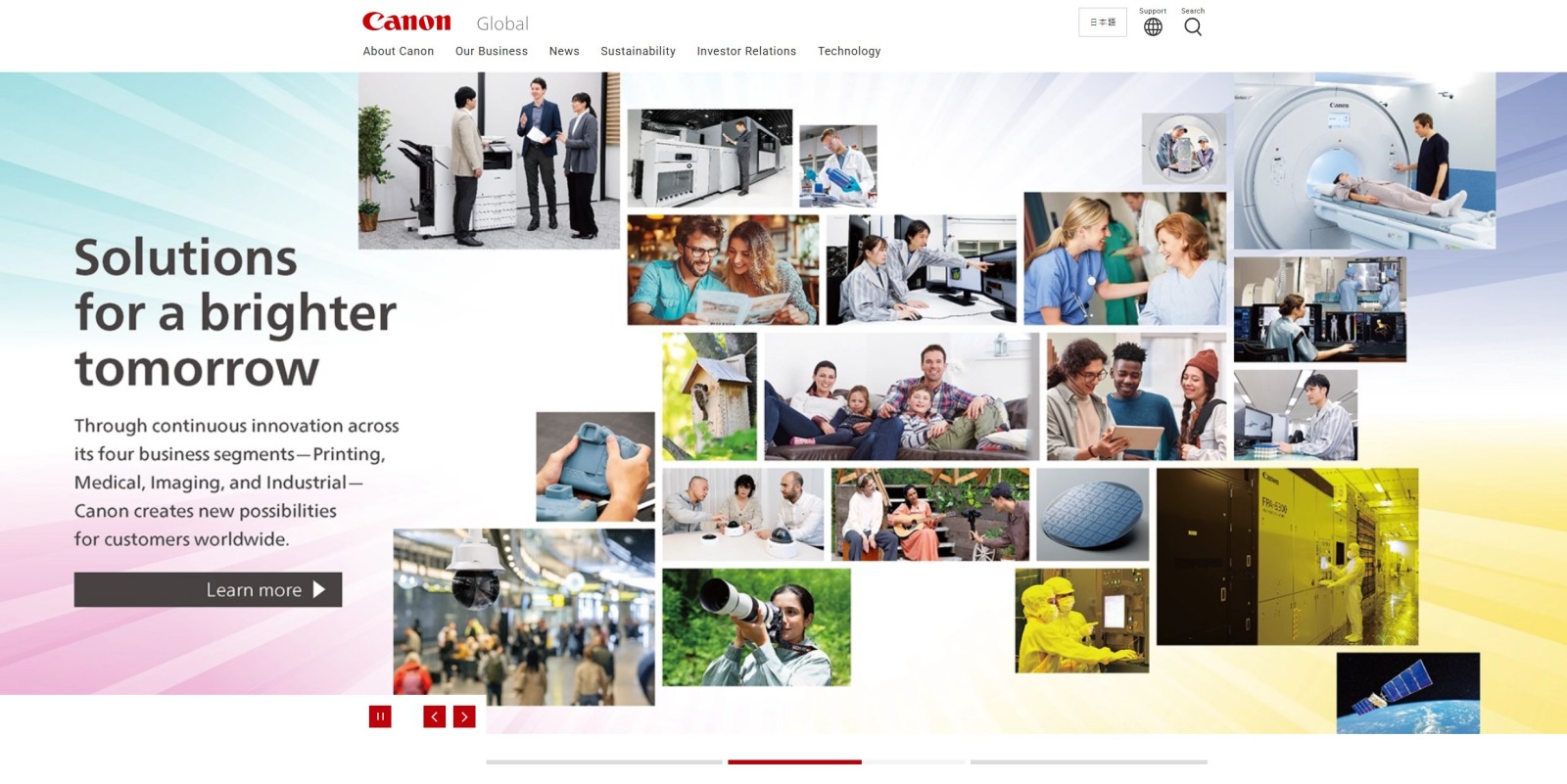
Canon is one of the best-known names in imaging technology, with a product portfolio covering digital cameras, interchangeable lenses, mirrorless systems, professional video equipment, compact cameras, printers, scanners, binoculars and a wide range of accessories. The company serves everyone from everyday photographers and home users to content creators, professional photographers, filmmakers, offices and large organizations.
What makes the Canon ecosystem particularly interesting is the breadth of products available around imaging. A camera can be paired with interchangeable lenses, flashes, microphones, batteries, grips and other accessories, while Canon’s printer portfolio extends from compact home printers to professional photo and commercial printing systems.
For creators, photographers and businesses, this means that choosing a Canon product is often only the beginning of the workflow. The wider ecosystem can include lenses, software, printing equipment, scanning solutions and other tools designed to work together.
Explore Canon cameras, lenses, printers and imaging technology.
Explore CanonCanon Product Categories
The Canon ecosystem covers several major areas. Cameras and lenses are central to the brand’s identity, with mirrorless and DSLR systems, compact cameras and professional imaging products. The company also develops cinema equipment for filmmakers and video professionals.
Beyond cameras, Canon produces printers for home and office use, photo printers, large-format printing systems, scanners and related supplies. The company also offers binoculars and other optical products.
This variety makes Canon relevant to several different types of buyers. A beginner looking for a first camera has very different requirements from a professional photographer, while a home user choosing a printer may have completely different priorities from a business looking for a high-volume document system.
Canon Mirrorless Cameras
Mirrorless cameras are one of the most important parts of the modern Canon imaging ecosystem. The company offers mirrorless cameras across several levels, from accessible models for people moving beyond smartphone photography to advanced systems designed for demanding professional work.
The EOS R system provides the foundation for Canon’s current interchangeable-lens mirrorless ecosystem. It combines camera bodies with the RF lens mount and a growing selection of RF and RF-S lenses.
For photographers, the advantage of an interchangeable-lens system is flexibility. Instead of being limited to one built-in lens, you can choose optics according to the type of photography you want to pursue.
Explore Canon EOS mirrorless cameras for photography and video.
Explore Mirrorless CamerasEOS R System
The EOS R family includes cameras aimed at different users and budgets. Depending on the model, features can include high-resolution sensors, advanced autofocus, high-speed continuous shooting, sophisticated video functions and electronic viewfinders.
The system is also designed around Canon’s RF lens family, giving photographers access to lenses covering wide-angle, standard, portrait, macro, telephoto and specialized applications.
Canon Cameras for Beginners
For someone buying their first interchangeable-lens camera, simplicity and versatility can be more important than having every professional feature. An entry-level EOS R camera can provide a path into photography while allowing the user to expand the system later with additional lenses.
When choosing a first camera, consider the size of the body, lens availability, autofocus performance, battery life, video capabilities and the types of photographs you expect to take.
Advanced and Professional Mirrorless Cameras
Advanced photographers may require faster continuous shooting, sophisticated autofocus, high-resolution sensors, robust construction and advanced video capabilities. Professional bodies are generally designed for demanding workflows where reliability and performance are important.
Sports and wildlife photographers may prioritize autofocus tracking and burst performance, while landscape photographers can place greater emphasis on resolution, dynamic range and lens selection.
Canon RF Lenses
Lenses are one of the most important parts of an interchangeable-lens camera system. Canon’s RF lens family provides optics designed for the EOS R mirrorless platform, while RF-S lenses are designed for compatible APS-C mirrorless cameras.
The lens catalog includes wide-angle lenses for landscapes and architecture, standard zooms for general photography, portrait lenses with wide apertures, macro lenses for close-up work and telephoto lenses for wildlife, sports and distant subjects.
Find Canon RF and RF-S lenses for your camera system.
Explore Canon LensesWide-Angle Lenses
Wide-angle lenses are useful for landscapes, architecture, interiors, travel photography and environmental portraits. They allow photographers to include more of a scene within the frame and can create a strong sense of perspective.
For landscape photographers, a wide-angle lens can be an important part of a lightweight travel kit. For architecture and interiors, the ability to capture a wider field of view can also be valuable.
Standard Zoom Lenses
A standard zoom is often one of the most versatile lenses in a photographer’s bag. It can cover everyday focal lengths and reduce the need to change lenses constantly.
This type of lens can be particularly useful for travel, family photography, events and general-purpose shooting.
Portrait Lenses
Portrait photographers often look for lenses with suitable focal lengths and wide maximum apertures. These characteristics can help create subject separation and attractive background rendering.
Canon’s lens ecosystem includes options for photographers who want compact portrait lenses as well as larger professional optics.
Telephoto Lenses
Telephoto lenses are useful when the subject is far away. Wildlife, sports, aviation and outdoor events can all benefit from additional reach.
When selecting a telephoto lens, photographers should consider focal length, maximum aperture, weight, image stabilization and portability.
Canon Professional Photography
Professional photography requires equipment that can handle demanding assignments. Wedding photographers, sports photographers, photojournalists, wildlife photographers and commercial studios can all have different requirements.
Canon’s professional ecosystem combines advanced camera bodies with professional RF lenses, flashes, accessories and other equipment.
For professionals, the choice of camera is only one part of the equation. Reliability, autofocus, ergonomics, lens availability, battery management, storage and workflow compatibility can all influence the overall system.
Canon Cameras for Wildlife Photography
Wildlife photography places particular demands on camera equipment. Subjects can move quickly, distances can be large and lighting conditions can change rapidly.
A suitable camera can benefit from fast autofocus tracking and high-speed continuous shooting, while a telephoto lens provides the reach necessary to frame distant animals.
Photographers should also consider the total weight of the system. A professional telephoto lens can be large and heavy, which makes portability an important consideration during long outdoor sessions.
Canon Cameras for Sports Photography
Sports photographers often need to capture fast-moving subjects at exactly the right moment. High burst speeds, responsive autofocus and suitable telephoto lenses can therefore be important considerations.
The ideal setup depends on the sport. Indoor sports can require fast lenses because lighting may be limited, while outdoor sports may allow greater flexibility in aperture and ISO.
Explore Canon equipment for fast-action photography.
Explore EOS CamerasCanon Cameras for Portrait Photography
Portrait photography is often about controlling perspective, light and background rather than simply maximizing technical specifications.
A camera with good autofocus can make it easier to maintain focus on a subject’s eyes, while a suitable portrait lens can help create a pleasing separation between the person and the background.
Canon offers multiple combinations of camera bodies and lenses that can be adapted to different portrait styles, from environmental portraits to close-up headshots.
Canon Cameras for Travel
Travel photography rewards a balance between image quality and portability. Carrying a large professional camera and several lenses can provide flexibility, but it can also become tiring during long days of sightseeing.
Compact mirrorless bodies and versatile zoom lenses can therefore be attractive to travelers who want high-quality images without carrying an extensive kit.
When choosing a travel setup, consider body size, lens size, battery life, charging options, weather resistance and the types of subjects you expect to photograph.
Canon Compact Cameras
Interchangeable-lens cameras are not always necessary. Compact cameras can be useful for people who want a dedicated imaging device without carrying multiple lenses.
Compact cameras can also make sense when portability is more important than system expansion. Depending on the model, features can include optical zoom, image stabilization, high-resolution video and specialized shooting modes.
For travel, family photography and everyday documentation, a compact camera can occupy a middle ground between a smartphone and a full interchangeable-lens system.
Canon Cinema and Professional Video
Canon also has a significant presence in professional video and cinema production. The Cinema EOS ecosystem includes cameras, lenses and accessories designed for filmmakers and professional video teams.
Cinema production can require different characteristics from still photography. Filmmakers may prioritize recording formats, dynamic range, color workflows, audio connectivity, monitoring options, cooling, lens compatibility and production ergonomics.
Explore Canon Cinema EOS cameras and professional video equipment.
Explore Cinema CamerasCanon Cinema EOS
Cinema EOS products are designed around professional video production. Depending on the camera, filmmakers can have access to advanced recording capabilities, professional connections, interchangeable lenses and workflows designed for larger productions.
These cameras can be relevant to independent filmmakers, documentary producers, commercial production companies, broadcasters and professional content creators.
Canon for YouTube and Content Creators
Video creators have different requirements from traditional photographers. A creator may need strong autofocus, a flip-out screen, compact dimensions, microphone connectivity and high-quality video recording.
Canon’s mirrorless ecosystem includes cameras that can be used for vlogging, interviews, product videos, tutorials, travel content and other online productions.
Canon RF-S Lenses and APS-C Photography
APS-C cameras can provide a useful balance between portability, image quality and system flexibility. RF-S lenses are designed specifically for compatible EOS R APS-C cameras.
The smaller format can be attractive to travel photographers, vloggers and enthusiasts who want a lighter setup while retaining access to interchangeable lenses.
Canon Flashes and Lighting
Lighting can transform photography, particularly for portraits, events and indoor work. Canon offers Speedlite flashes and related accessories designed to work with compatible camera systems.
External flash can provide more control than a built-in flash, allowing photographers to position or direct light differently.
When choosing a flash, consider guide number, recycling time, wireless capabilities, compatibility and the type of photography you intend to do.
Canon Binoculars and Optical Products
Canon’s product portfolio extends beyond cameras and printers into optical products such as binoculars. These products can be relevant to wildlife observers, travelers, outdoor enthusiasts and anyone who needs magnification without carrying a camera system.
Optical equipment should be evaluated according to magnification, field of view, stabilization, size and intended use.
Canon Printers
Printing is another major part of the Canon ecosystem. The company offers printers for home users, photographers, students, small offices and professional environments.
The printer portfolio includes inkjet printers, multifunction systems, photo printers and professional printing solutions. Different printer families are designed for different workflows, so choosing the right model depends heavily on what you print.
Explore Canon printers for home, photography and office use.
Explore Canon PrintersCanon PIXMA Printers
PIXMA is one of Canon’s most recognizable printer families. PIXMA printers cover a range of home and creative applications, including document printing, scanning, copying and photo printing depending on the model.
For families and home offices, multifunction functionality can be especially useful because one device can handle several everyday tasks.
Canon MAXIFY Printers
MAXIFY products are designed with small-office and business printing needs in mind. Business users may prioritize printing speed, paper capacity, connectivity, document handling and running costs.
When choosing an office printer, it is important to estimate monthly print volume rather than focusing only on the purchase price.
Canon Professional Photo Printers
Photographers who print their own work can require more specialized equipment. Professional photo printers are designed around image quality, color reproduction and support for photographic media.
For photographers who sell prints or create physical portfolios, the printer becomes part of the creative workflow rather than simply an office device.
Canon MegaTank Printers
Canon MegaTank printers use refillable ink tanks rather than traditional cartridge-based systems. This type of printer can be attractive to users who print frequently and want to manage ink differently.
Before purchasing, compare the printer’s intended monthly volume, included ink, refill system, print quality and available functions such as scanning and copying.
Canon Laser and Business Printing
Business environments can have different requirements from home users. High-volume document printing, network connectivity, scanning, copying and workflow integration may be more important than photo capabilities.
Canon’s business portfolio includes professional printing and multifunction equipment designed for organizations with more demanding document workflows.
Canon Scanners
Scanning is another important part of document and image workflows. Canon scanners can be used for photographs, documents, receipts, business records and other materials.
Dedicated scanners can provide features that are not always available from an all-in-one printer, including specialized document handling and higher-volume scanning workflows.
Explore Canon scanners and document imaging products.
Explore Canon ScannersCanon Photo Printing
Digital photography has made it easy to keep thousands of images on phones and computers, but physical prints remain important for albums, gifts, portfolios and professional photography.
Canon photo printers are designed to provide photographers with ways to turn digital images into physical prints. Depending on the printer, users can work with different paper sizes, media types and color-management workflows.
Canon Ink and Printing Supplies
Printer ownership involves more than the printer itself. Ink, paper and other supplies can have a significant effect on the total cost of printing.
When comparing printers, look at the availability and price of compatible ink and consider how much you expect to print. A printer with a low purchase price may not necessarily have the lowest long-term running cost.
Canon for Home Offices
A home office often requires a combination of printing, scanning, copying and digital document management. A multifunction printer can simplify this setup by combining several functions in one device.
Wireless connectivity can also be useful when multiple computers, tablets or smartphones need to access the printer.
Canon for Small Businesses
Small businesses can have more demanding printing requirements than households. Invoices, contracts, reports, shipping documents and marketing materials can all contribute to significant monthly print volumes.
When choosing equipment for a small business, consider printing speed, paper capacity, network connectivity, scanning capabilities, maintenance requirements and total operating costs.
Canon for Professional Photographers
Professional photographers often build an entire workflow around their camera system. A typical setup can include a camera body, several lenses, flashes, memory cards, spare batteries, a computer, editing software and a printer.
The advantage of remaining within a broad ecosystem is that photographers can gradually expand their equipment rather than replacing the entire system every time their requirements change.
Canon for Content Creators
Content creators often need equipment that combines photography and video capabilities. A camera used for YouTube may need strong autofocus, a high-quality microphone connection, a practical screen and reliable video recording.
Creators who produce product reviews, tutorials, travel videos and social content can also benefit from a flexible lens ecosystem.
For creators starting with one camera, a versatile zoom lens can be a practical first choice. Additional lenses can then be added as the creator discovers which types of content they produce most often.
Canon for Travel Photography
Travel photography requires equipment that is capable but portable. A compact mirrorless body and a versatile zoom lens can provide a broad range of focal lengths without requiring a large camera bag.
Travelers should also consider battery charging, weather protection, spare batteries and storage. A lightweight tripod and compact camera bag can complete a practical travel setup.
Canon Accessories
The Canon ecosystem includes a wide range of accessories that can extend the capabilities of cameras and printers. Camera accessories can include batteries, chargers, grips, flashes, remote controls, microphones, memory-related products and protective equipment.
Lenses and accessories should always be checked for compatibility with the exact camera model. Canon’s EOS R system, for example, uses the RF mount, while older EOS DSLR systems use the EF mount and related variations.
How to Choose the Right Canon Camera
1. Decide What You Photograph
Start with your primary subjects. Portraits, landscapes, wildlife, sports, travel and video can all favor different camera and lens combinations.
2. Choose the Camera Format
Consider whether you want a compact camera or an interchangeable-lens mirrorless system. Interchangeable lenses provide more flexibility but also add cost and weight.
3. Think About Lenses Before Buying the Body
A camera body is only one component of a system. Research the lenses you are likely to want before choosing a body, particularly if you expect to expand your equipment later.
4. Consider Video Requirements
If you create video, look beyond still-image specifications. Autofocus, recording formats, microphone support, screen articulation, stabilization and heat management can all matter.
5. Consider Size and Weight
A technically impressive camera is not necessarily the right camera if it is too large for the way you actually photograph. Portability can determine how often you carry and use the equipment.
How to Choose the Right Canon Printer
Home Printing
For occasional household printing, a compact multifunction printer may be sufficient. Look for wireless connectivity, scanning, copying and easy access to replacement ink.
Photo Printing
Photographers should prioritize color reproduction, supported paper sizes, media compatibility and the printer’s photo capabilities.
Office Printing
Business users should focus on print volume, speed, paper capacity, network features, scanning and operating costs.
Canon Product Comparison Guide
| Category | Best Suited For | Key Things to Compare |
|---|---|---|
| EOS R Mirrorless | Photography and video | Sensor, autofocus, burst speed, video and lenses |
| RF Lenses | System photographers | Focal length, aperture, stabilization and size |
| Cinema EOS | Professional video | Recording formats, dynamic range, connections and workflow |
| PIXMA | Home and photo printing | Photo quality, ink, connectivity and multifunction features |
| MAXIFY | Small offices | Speed, volume, paper handling and running costs |
| MegaTank | Frequent printing | Tank capacity, refill cost and monthly volume |
| Scanners | Documents and photos | Resolution, speed, document handling and connectivity |
Canon Imaging Ecosystem
One of the biggest advantages of a broad imaging ecosystem is the ability to expand over time. A photographer might begin with one camera and one lens, then add a portrait lens, telephoto lens, flash and additional accessories.
A creator may begin with a camera designed for hybrid shooting and later add dedicated video equipment. A home user might start with a multifunction printer and eventually move to a dedicated photo printer.
This modular approach means that the right purchase today does not necessarily have to represent the complete system you will use several years from now.
Canon Software and Workflow
Hardware is only one part of digital imaging. Photographers and video creators also need ways to transfer, organize, edit and manage their files.
Canon provides software and support resources designed around its cameras and printers. Depending on the product, these can assist with camera configuration, image transfer, printing and device management.
For professional workflows, compatibility with third-party editing and production software can also be important. Photographers may use RAW-processing software, while filmmakers may work with professional video-editing and color-grading applications.
Canon Support and Product Registration
Support is an important consideration when purchasing imaging equipment. Canon provides product information, manuals, drivers, software, troubleshooting resources and support through its regional websites.
Camera equipment can remain in use for many years, so access to documentation and compatible accessories can be valuable over the lifetime of a product.
Canon for Different Types of Buyers
- Beginners: entry-level mirrorless cameras and versatile lenses.
- Travel photographers: compact bodies and lightweight zoom lenses.
- Portrait photographers: suitable mirrorless bodies and fast portrait lenses.
- Wildlife photographers: fast autofocus systems and telephoto lenses.
- Sports photographers: high-speed shooting and responsive autofocus.
- Content creators: hybrid cameras, lenses and audio accessories.
- Filmmakers: Cinema EOS cameras and professional lenses.
- Home users: multifunction printers and compact photo printers.
- Photographers: dedicated photo printers and imaging equipment.
- Small businesses: office printers, scanners and document systems.
Canon Buying Checklist
Before purchasing a Canon product, it is worth considering the complete workflow rather than focusing only on the headline specification.
- Define the main purpose of the product.
- Compare models within the same product family.
- Check compatibility with existing equipment.
- Research available lenses and accessories.
- Consider size and weight.
- Check connectivity options.
- Review battery and charging requirements.
- For printers, estimate your monthly print volume.
- Check ink or other consumable costs.
- Review support and software compatibility.
- Consider whether you expect your equipment needs to grow over time.
Ready to explore Canon cameras, lenses and printers?
Visit CanonFrequently Asked Questions About Canon
What products does Canon make?
Canon produces cameras, interchangeable lenses, professional cinema equipment, compact cameras, printers, scanners, binoculars, accessories and other imaging-related products.
What is the Canon EOS R system?
EOS R is Canon’s mirrorless camera system built around the RF lens mount. It includes camera bodies and RF and RF-S lenses for different photography and video applications.
Does Canon make mirrorless cameras?
Yes. Mirrorless cameras are a major part of the EOS R ecosystem, with models designed for beginners, enthusiasts, advanced photographers and professional users.
Does Canon make professional cameras?
Yes. The company offers advanced and professional cameras for areas such as sports, wildlife, commercial photography, journalism and professional video production.
Does Canon make lenses?
Yes. Canon offers a large selection of interchangeable lenses covering wide-angle, standard, portrait, macro and telephoto applications.
What are RF lenses?
RF lenses are designed for Canon’s EOS R mirrorless camera system. RF-S lenses are designed for compatible APS-C EOS R cameras.
Does Canon make cinema cameras?
Yes. The Cinema EOS range is designed for professional filmmaking and video production and includes cameras and related cinema equipment.
Does Canon make printers?
Yes. Canon offers printers for home users, photographers, small businesses and professional environments. The portfolio includes multifunction printers, photo printers, MegaTank systems and business printing equipment.
What is PIXMA?
PIXMA is a Canon printer family covering home, creative and photo-printing applications. Depending on the model, PIXMA printers can provide printing, scanning and copying.
What is MAXIFY?
MAXIFY is a printer family focused primarily on business and small-office use, with models designed around document printing, productivity and office workflows.
What are Canon MegaTank printers?
MegaTank printers use refillable ink tanks rather than conventional replaceable cartridges. They are designed for users who print frequently and want a different approach to ink management.
Does Canon make photo printers?
Yes. Canon offers printers designed specifically for photographic printing, including systems aimed at enthusiasts and professional photographers.
Does Canon make scanners?
Yes. Canon offers scanners for documents, photographs and other imaging applications, including solutions designed for business workflows.
Is Canon good for photography?
Canon has a broad photography ecosystem covering camera bodies, interchangeable lenses, flashes and accessories. The appropriate system depends on the type of photography, budget, portability requirements and desired features.
Is Canon suitable for video?
Yes. Canon offers hybrid mirrorless cameras as well as dedicated Cinema EOS equipment. Different products target different levels of video production.
Which Canon camera is best for beginners?
There is no single model that suits every beginner. A first-time buyer should consider camera size, budget, lens availability, autofocus, video capabilities and the types of photography they expect to pursue.
Which Canon lens should I buy first?
A versatile standard zoom is often a practical starting point because it covers a useful range of everyday focal lengths. Portrait, wide-angle or telephoto lenses can then be added according to the photographer’s preferred subjects.
Can Canon cameras be used for YouTube?
Yes. Compatible Canon mirrorless cameras can be used for YouTube, vlogging, interviews, tutorials, product videos and other forms of online content. The appropriate model depends on video resolution, autofocus, audio, screen and connectivity requirements.
Where can I find Canon product support?
Canon provides regional support websites with manuals, drivers, software, troubleshooting information, product registration and other resources. Availability varies by market and product.
Explore Canon
Canon offers one of the broadest imaging ecosystems available to photographers, creators, filmmakers, home users and businesses. From EOS mirrorless cameras and RF lenses to Cinema EOS equipment, PIXMA printers, MegaTank systems and professional document solutions, the portfolio covers many different workflows.
The best way to choose a product is to start with your intended use. A travel photographer may need a compact camera and versatile lens, while a wildlife photographer may prioritize autofocus and telephoto reach. A filmmaker may need professional recording capabilities, while a home office user may be more interested in printing speed, scanning and running costs.
Because the ecosystem can grow with your needs, it is also worth thinking beyond the first purchase. Lens compatibility, accessories, consumables, software and support can all affect the long-term value of an imaging system.
Explore Canon Cameras, Lenses & Printers
Discover Canon imaging products for photography, video, printing, scanning, home use and professional workflows.
Visit Canon